


The historical context of the survived genocide against the Serbian people during the 1941–1945 period, the breakup of Yugoslavia, and the violent secession of Slovenia and Croatia—combined with the attempt by Croats and Muslims to majoritize and outvote Serbs in BiH as they prepared for a violent secession—gave birth to Republika Srpska and, consequently, the Army of Republika Srpska as defense mechanisms for the Serbian people.
The Role and Withdrawal of the JNA
During those turbulent years of 1991 and 1992, the Yugoslav People's Army (JNA) failed to respond to the doctrinal and strategic requirements for preserving the state. Shortly after the outbreak of hostilities in the former Socialist Republic of BiH, a decision was made to withdraw JNA units, which was carried out by mid-May 1992.
In municipalities with a Serbian national majority, alongside Territorial Defense units, crisis staffs and units were formed under the leadership of the Serbian Democratic Party. In rural areas, amidst an atmosphere of mistrust and fear, self-organized "watches" (patrols) were often established.
The Founding of the Army of Republika Srpska
Due to these circumstances, the Serbian Republic of BiH formalized the creation of its army and introduced it into the legal system on May 12, 1992. This step was taken once it became clear that the other two constituent peoples in Bosnia and Herzegovina had established military organizations that were already launching attacks against the Serbian people.
At that time, during its session in Banja Luka, the Assembly of the Serbian People in Bosnia and Herzegovina passed the "Decision on the Formation of the Army of the Serbian Republic of Bosnia and Herzegovina," No. 03-234/92. (The army later changed its name in accordance with the naming of the state, and from September 1992, it was officially called the Army of Republika Srpska, abbreviated as VRS in literature.)
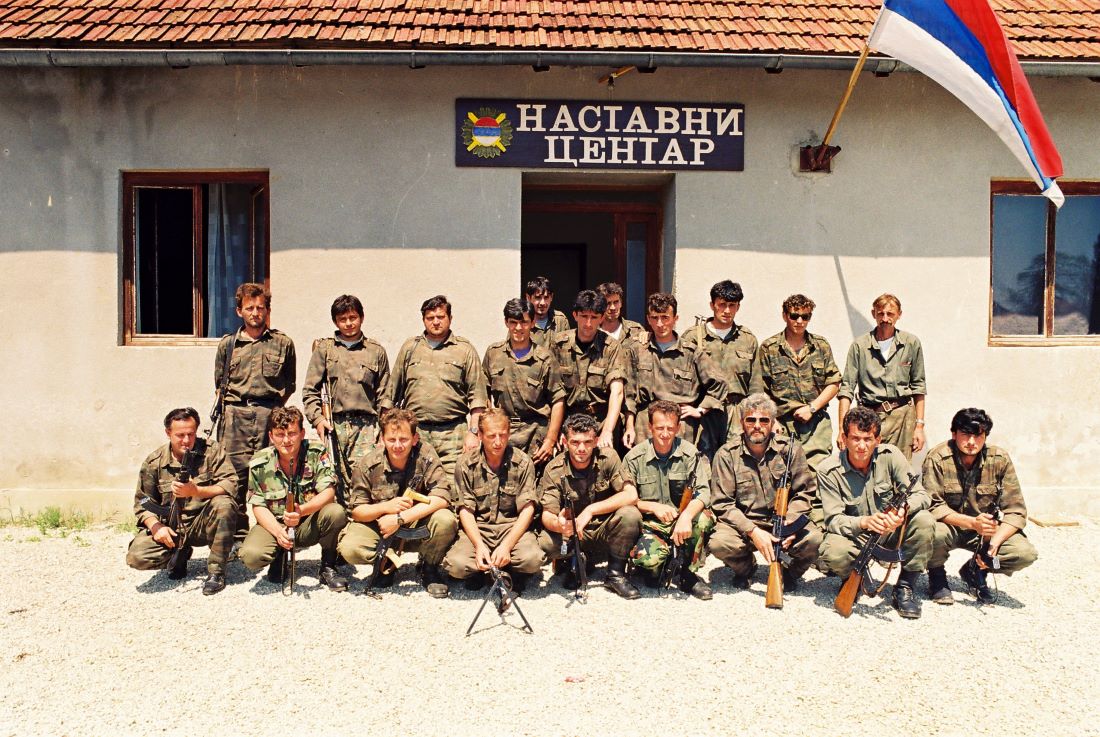
Source of the photograph: Municipal Veterans' Organization Novi Grad; 3rd Infantry (Republic of Srpska) Regiment.
Formation of the Main Staff and VRS Leadership
The Main Staff (GŠ) of the Army of Republika Srpska was established in Crna Rijeka, northeast of Han Pijesak. Lieutenant General Ratko Mladić was appointed Commander of the Main Staff of the Army of the Serbian Republic of Bosnia and Herzegovina, while Manojlo Milovanović was appointed Chief of the Main Staff.
By late 1992, the Supreme Command (VK) of the RS Armed Forces was formed as a civilian body for leading and commanding the Army of Republika Srpska during the war, headed by the President of Republika Srpska, Radovan Karadžić.
Organization and Mobilization
The organizational order for the structural formation of the VSR BiH was issued by the Main Staff on June 21, 1992, while its definitive formation was completed in November 1992.
Creating an army during a war was a dynamic process. In addition to the Constitution, the basis for the operation and manning of the VRS were the Law on the Army and the Law on Defense of the RS.
On May 20, 1992, the President of the Presidency of the Serbian Republic of Bosnia and Herzegovina announced the Decision on General Public Mobilization, which required:
"the mobilization of all military conscripts (men aged 18 to 60 and women aged 18 to 55), civil protection conscripts, and those under labor obligation, as well as the material resources of citizens, commercial enterprises, and other organizations for the needs of the Army of the Serbian Republic of Bosnia and Herzegovina."
The army was manned by RS citizens regardless of nationality, though given the population's national composition and wartime events, it is clear that Serbs made up the absolute majority, while members of other nationalities were also present.
A mixed-type system of military organization was applied, composed of conscripts, soldiers serving their term, contract soldiers, and professional officers and non-commissioned officers. The first recruit oath-taking ceremony was organized for Vidovdan, June 28, 1992.
Organizational Structure and Capacities
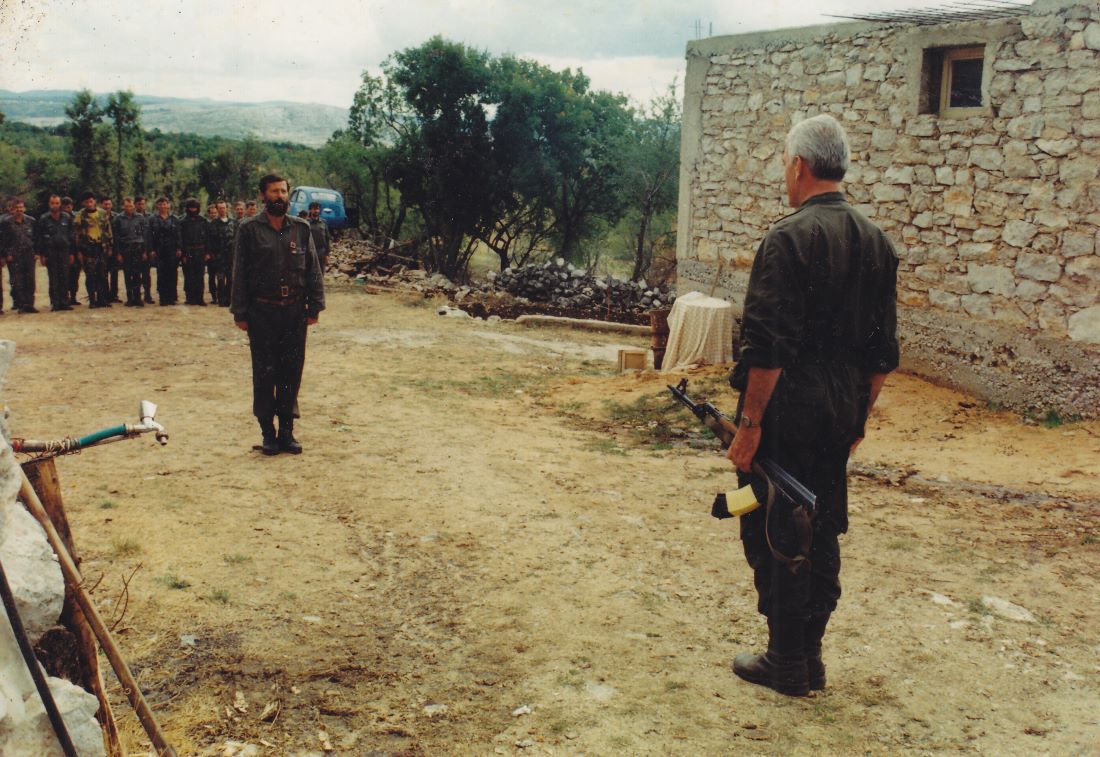
Regarding the organizational structure, it largely reflected the military standards of the time, but it was also a reflection of the traditions from which the army emerged, aligned with its goal of preserving and defending the state and the Serbian people under difficult wartime conditions.
The army served as the defense for the democratically made decisions of the Serbian people and the state in the former BiH. Essentially, the VRS was a defensive military formation created and operated under harsh wartime conditions, with a frontline that at times extended over 2,000 kilometers.
The maximum number of VRS members during the war was nearly 215,000 fighters, of which only 2% constituted the permanent staff, while as much as 98% were in the reserve. This demonstrates that it was a "people's army." The fighters possessed various specialties and varying levels of training.
VRS Structure and Corps
The army consisted of the Main Staff, six corps, and the Air Force and Air Defense. The VRS comprised two branches: Ground Forces and the Air Force and Air Defense (V i PVO).
Within these branches, there were specific service arms and services. These arms included: infantry, artillery, armored-mechanized units (OMJ), engineering, signals, atomic-biological-chemical defense (ABHO), aviation, air defense artillery-rocket units (ARJ PVO), electronic reconnaissance, and electronic countermeasures.
The VRS corps were: the 1st Krajina Corps, the 2nd Krajina Corps, the East Bosnian Corps, the Drina Corps (formed in November 1992), the Sarajevo-Romanija Corps, and the Herzegovinian Corps. The VRS Air Force and Air Defense practically functioned as a separate entity, modeled after the corps.
There were also units under the direct command of the VRS Main Staff, as well as combat and tactical groups, and other forms of organization in line with the multi-level command and control system.
Throughout the Defense and Homeland War, VRS units, led by the Main Staff, conducted numerous defensive and offensive operations and battles.
Notable operations include: "Corridor 92," the lifting of the blockade of Smoluca, "Vrbas 92," the First Mitrovdan Offensive, "Lukavac 93," the Second Mitrovdan Offensive, "Vaganj 95," and many others.
Recommended Literature:
- Предраг Лозо, „Војска Републике Српске“: у Република Српска у Одбрамбено-отаџбинском рату, РЦИРЗ, Бања Лука 2017, 79-105.
- Војска Републике Српске, приредили: Др Драгиша Јуришић, Др Предраг Обреновић, Љубиша Вулин / The Republic of Srpska Army, Dragiša Jurišić, PhD, Predrag Obrenović, PhD Ljubiša Vulin, РЦИРЗ, Бања Лука 22,