


Second Mitrovdan Offensive represents a major offensive operation by the so-called Army of the Republic of Bosnia and Herzegovina (Army of RBiH) against the positions of the Army of the Republic of Srpska (VRS) in eastern Herzegovina, carried out in November 1994 as part of Operation “Autumn 94”. In Serbian collective memory, this operation is called Second Mitrovdan Offensive, because it took place during the days of celebrating the family patron saint’s day (slava) of Saint Demetrius, while the battles from November 1992 are designated as First Mitrovdan Offensive.
Croat-Muslim ceasefire and preparations for new attacks on the Republic of Srpska
The Washington Agreement was signed on March 18, 1994. It ended the war between the Muslims and Croats. The strengthening of foreign diplomatic and military assistance, together with the opportunity to turn the military initiative in their favour, gave rise — at the top of the command chain of the so-called Army of RBiH in Sarajevo — to the intention to launch intensified new attacks on VRS positions. Eastern Herzegovina was also a target.
Planning: a strike with large forces from the rear
The former two corps of the so-called Army of RBiH — the 4th from the Mostar area and the 6th from the Konjic area — were merged into a single military mechanism. After the agreement and the still fragile ceasefire with the Croats, they planned a major offensive action against the VRS defence positions, i.e., the 8th Herzegovina Motorized Brigade, which consisted of troops from the Neretva Valley and Nevesinje and was deployed on the mountain ranges above Mostar.
This operation, codenamed “Autumn 94”, was intended to be the largest offensive against the Army of the Republic of Srpska in Herzegovina, one of the most extensive actions of the entire war, and to reverse the strategic situation on this sector of the Republic of Srpska’s defence. Operation “Autumn 94” was conceived in accordance with the tactics employed by the so-called Army of RBiH in 1994. It consisted of inserting groups deep behind the combat lines so that their actions would facilitate a frontal breakthrough of the VRS defences. Such tactics had already been used in Operation “Jezero 94” on the right flank of the Nevesinje Brigade, near the approaches to Konjic, in mid-September 1994, where the Muslim side achieved partial successes against the defence of the 2nd Light Infantry Brigade of the VRS from Borci.
The action had been prepared throughout the summer, with reconnaissance of the terrain and Serbian positions. After the 5th Corps of Atif Dudaković launched operations in the western Krajina theatre around Bihać on October 24, 1994, and the start of the major offensive operation “Grmeč 94”, it appeared that conditions had matured for a large-scale offensive on the Herzegovina front as well. Although the situation on the Bihać battlefield quickly turned in favour of the VRS, and despite the nature of the VRS defence positions (fortified on dominant peaks of the mountain ranges above the Neretva Valley, with limited ability to control the spaces in between), as well as a degree of desire for self-validation and prestige within Muslim military circles, the commander of the Muslim 4th Corps, Ramiz Dreković, proceeded with the insertion of around 1,000 Muslim soldiers behind the first VRS lines in the Podveležje area and other parts of the Mostar–Nevesinje battlefield. After separate insertions of larger groups over the course of two nights, they were supposed to launch a surprise attack from the rear on VRS positions on November 11, break through the first line of defence, the rear area and brigade command posts, and create conditions for an advance towards Nevesinje and beyond.
Одбрана 8. херцеговачке моторизоване бригаде
However, the soldiers of the 8th Herzegovina Motorized Brigade (VRS), already veterans with two and a half years of combat experience from the Herzegovina front and other theatres (where they had fought during the lull caused by the Croat-Muslim conflict in Mostar and its surroundings), and drawing on the lessons from the First Mitrovdan Offensive of 1992, detected and destroyed one infiltrated enemy group on the very first day of the insertion. The infiltration of Muslim forces into the VRS rear in the Podveležje and Vranjevići area was carried out on the evening of November 9, 1994. A VRS patrol tasked with searching communications discovered traces the next morning in the Busak area. The brigade command responded by forming a group to search the rear terrain. A group of about 20 fighters, in a very short time, discovered one of the infiltrated formations in the area of the village of Svinjarina. This formation numbered 113 soldiers, and combat contact was immediately established. They remained in position in that state until evening. The command of the 8th Herzegovina Motorized Brigade, informed by previous experience and intelligence about a possible attack, increased combat readiness measures, ordered all-round defence of its units, closed certain passages, and responded by reinforcing and regrouping forces. On the second night, the planned insertion of Muslim forces continued, although some formations failed to penetrate through the VRS positions, creating gaps among the infiltrated attacking forces.
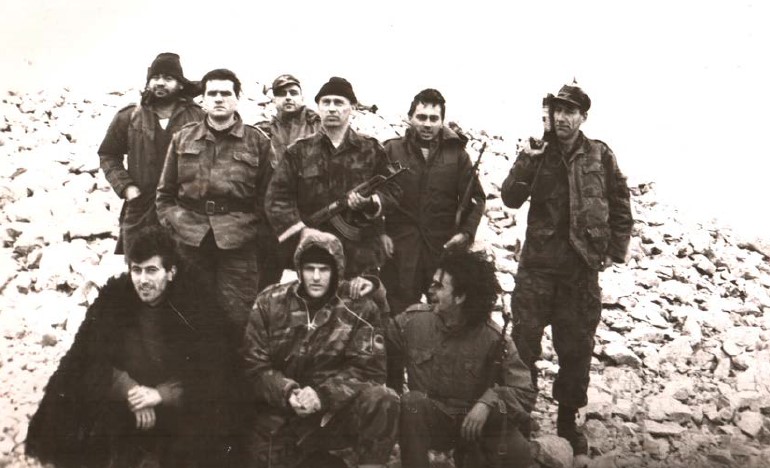
On the morning of November 11, a little earlier than planned, the large-scale attacks by the infiltrated units against the VRS positions began. However, the defenders were ready. The defence of the positions — from the brigade command led by Major Zoran Purković, through the reserves that moved out from Nevesinje, to the fighters on the front lines — from the slopes of Prenj and Rujište, across Prijevorac, Pločno and the relay on Brasina on Velež, the villages of the Podveležje plateau (especially in Banjdol and Ravnice), then across Čobanovо Polje and Vranjevići, Čomora, Kamena, all the way to the slopes of Brštanik and Šćepan Krst — was resolute and strong. Fierce fighting with the infiltrated enemy took place that day even in the morning hours at the brigade command post on Prijeki Grmi, and later at Bakračuša, Rabina and Žuberin, far behind the first line of defence. By successfully defending Mount Velež, the villages of the Podveležje plateau, the battlefield in the Vranjevići area and other territories towards Nevesinje itself, new suffering and misfortune for the Serbian people were prevented, and eastern Herzegovina remained a compact territory in the south of the Republic of Srpska.
War crimesи
In this action, Muslim units committed clear war crimes: attacks on medical vehicles and the killing of wounded and captured persons, looting, mistreatment, capture and murder of Serbian civilians in the villages of Žuberin and Rabina, mostly elderly people.
Attacks on medical services and the wounded
На локалитету Гњило брдо, у рејону одговорности 3. батаљона 8. хмтбр, 11. новембра 1994. године, изјутра, десио се евидентан ратни злочин. У јасно обиљеженом санитетском возилу, које је превозило повријеђеног борца, муслимански војници су убили возача Гојка Крњеушића и рањеника Ненада Шиповца (чије тијело су и запалили) , док је медицинска сестра Борика Митрић рањена. На том локалитету убијен је и санитетлија Радивоје Радуловић. Да напади на санитетско возило, супротно ратним обичајима и међународним правним нормама, нису били случајност свједочи и чињеница да су истог дана, на удаљености само од неколико километара, припадници муслиманске јединице СОПН-а, на Пријеким грмима, из засједе пуцали на санитетско возило ВРС у покрету и тада је у обје ноге рањен возач санитета Бранислав Нана Ивковић.
Žuberin and Rabina
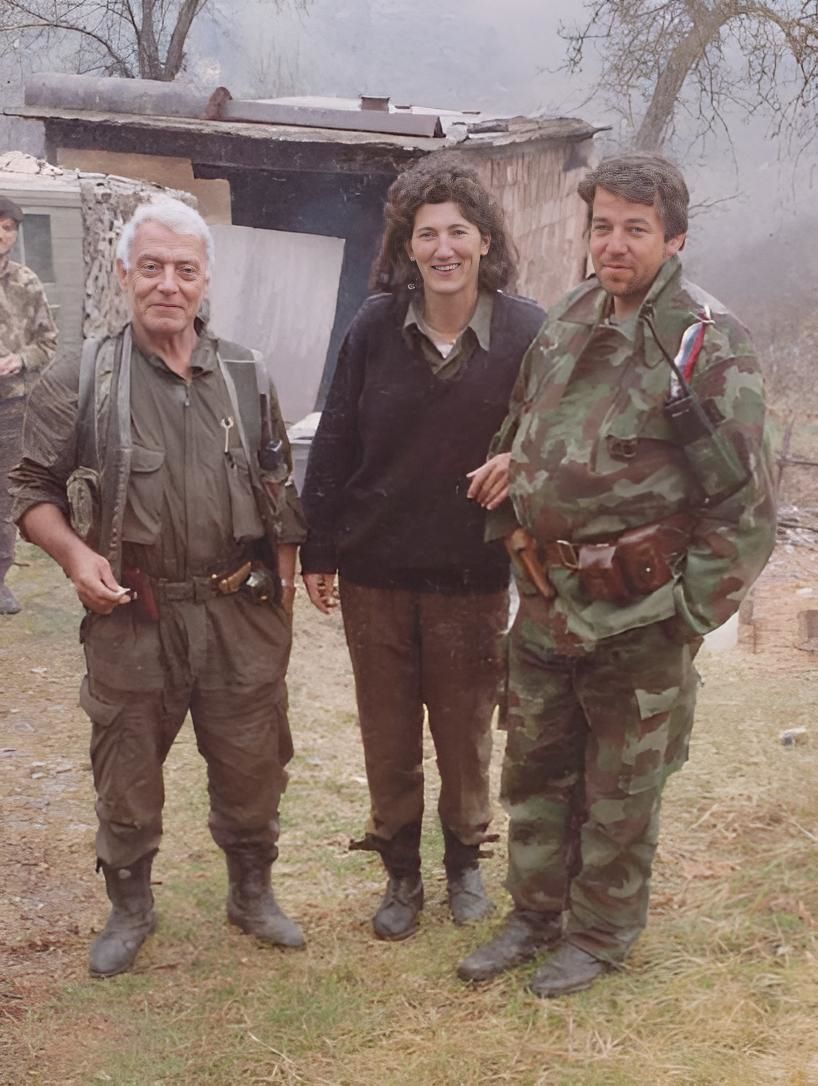
Darinka Čabrilo, born in 1929, was killed in the house in Žuberin where she was staying. Her husband, who was nearby outside the house, was wounded in the leg but managed to escape. Milosav Čabrilo, born in 1940, was first shot in the legs by Muslim soldiers above the village; they then approached and fired at close range into his head. Mara Čabrilo, born in 1911, was also killed in the village. In the village of Rabina, about a kilometre from Žuberin, Radojka Puhalo, born in 1922, was killed around 6:00 a.m. that morning in front of her burning house. That such behaviour was not an isolated incident is shown by the overall conduct of this military group and the damage inflicted on the village. On that day in Žuberin, in addition to the village school, the family homes of Todo Čabrilo, Drago Čabrilo and Dušan Čabrilo were burned. The stables of Drago Čabrilo and Darinka Čabrilo were also set on fire, and three cows burned inside them. According to statements collected from Žuberin residents, the Muslims looted houses, taking gold, money and smaller valuables. They broke into houses by force, smashing doors and windows and destroying other property. They also burned several haystacks, damaged and destroyed two passenger cars and one tractor.
The attackers forcibly took 22 residents of Žuberin and held them for several hours as hostages in the house of Miladin Čabrilo. In that group were 4 elderly men, several girls, and the rest elderly women. Two soldiers remained constantly inside Miladin’s house, while the others looted and burned throughout the village. The host was forced to slaughter a sheep and prepare it for the attackers. However, when VRS forces arrived around 14:00 and began retaking the attacked village, the infiltrated group tried to use the gathered civilians from the house — whom they led towards the school — as a human shield. The rapid development of events forced them to abandon the attempt. After setting the school on fire, they left the village with the “promise that they would return.”
Crimes against prisoners
Several captured VRS soldiers from this action testified about various forms of physical and psychological mistreatment while in captivity in Mostar, Jablanica and Konjic, in which members of the command staff of Muslim units also took part.
Crime against 4 Serbian prisoners in Jablanica
A particularly brutal crime was the murder of four Serbian soldiers, originally from Mostar, in Jablanica. They were captured at the Plavac location on November 13, 1994, during the continued fighting on the northern axis of Operation “Autumn 94”. This cruel war crime was committed against helpless, captured, previously tortured and beaten prisoners of war. The youngest, Miljan Radulović, was not yet 20 years old, Slobodan Pudar was 24, Mirko Simić was 35, and Risto Čolović was 38. The fate of the Radulović family is especially tragic because Miljan’s father, Branko, had died in August 1994 from the consequences of wounds sustained earlier.
Тијела убијених заробљеника су у марту 1995. године размјењена, те у Невесињу идентификована и прегледана. У документацији коју је потписао обдуцент, потпуковник др Зоран Станковић се види су имала више рана и деформитета насталих углавном тупим предметима. За једно тијело је констатовано да у предјелу врата има устрелну рану нанесену „ручним ватреним оружјем, чија се даљина испаљења није могла оцијенити“. На другом тијелу се види више рана „насталих дејством пројектила из ручног ватреног оружја, највјероватније из даљине“. На свим тијелима констатоване су повреде нанесене „замахнутим механичким оруђем“. Ране су на тијелима углавном нанесене у предјелу врата и главе, иако постоје и на осталим дијеловима, од којих су јасно констатовани и „ломови ребара, ране напоткољеници и сл.“. У мишљењу обдуцента се јасно види да је коришћено „дејство шиљка и оштрице замахнутог механичког оруђа“ те да су ране „нанесене за живота“. Злочинци су убијали и „одсијецањем главе“, које је констатовано на једном тијелу, што је извршено „највјероватније у два дијела“. Прво ножем, бајонетом и слично, а затим су могли да им послуже сјекира, сaтара и друго
Human losses
Serbian losses in this operation amounted to 24 fighters and 4 civilians, as well as 42 seriously wounded and 26 lightly wounded fighters. Ten members of the VRS were captured.
The fallen Serbian soldiers were: Milorad Avdalović, Drago Aćimović, Vojislav Buha, Branko Vuković, Miloš Zelenović, Gojko Krnjeušić, Branko Kureš, Dragan Miljanović, Petar Pejanović, Milovan Pištalo, Ratko Pudar, Slobodan Pudar, Radoslav Pušara, Miljan Radulović, Radivoje Radulović, Savo Rul, Mirko Simić, Mirko Čabrilo, Risto Čolović, Ljubomir Čolović, Jovica Šakota, Petar Šarenac, Spaso Šijak, Nenad Šipovac. Killed civilians: Darinka Čabrilo, Milosav Čabrilo, Mara Čabrilo and Radojka Puhalo.
The official narrative of the attackers (the Muslim side) regarding their losses states that 82 soldiers were killed, 94 wounded, and 10 captured in the operation. Sources from the VRS side report significantly different figures on Muslim losses. Based on footage from Serbian Radio Television showing liquidated Muslim soldiers (only those collected in front of the brigade command at Prijeki Grmi), as well as witness statements, it can be concluded that the attackers’ losses were higher than the official Muslim data from that time. The number of bodies shown at Prijeki Grmi varies in testimonies from around 50, to 70, up to 120 or more. By that analogy, testimonies and documents close to these conclusions indicate that “Muslim forces had 117 killed.” The vast area covered by the operation must also be taken into account — not all neutralized infiltrated soldiers could have been brought to and shown in the footage from Prijeki Grmi. The difficult weather and terrain conditions for extracting the attackers, along with the military measures taken by the VRS to eliminate the remaining broken enemy groups and individuals, examples of panic and death in inaccessible mountainous areas (as a result of which a number of Muslim soldiers are still listed as missing to this day), lead us to the conclusion that the offered data must be taken with reservation and caution.
Defense of eastern Herzegovina
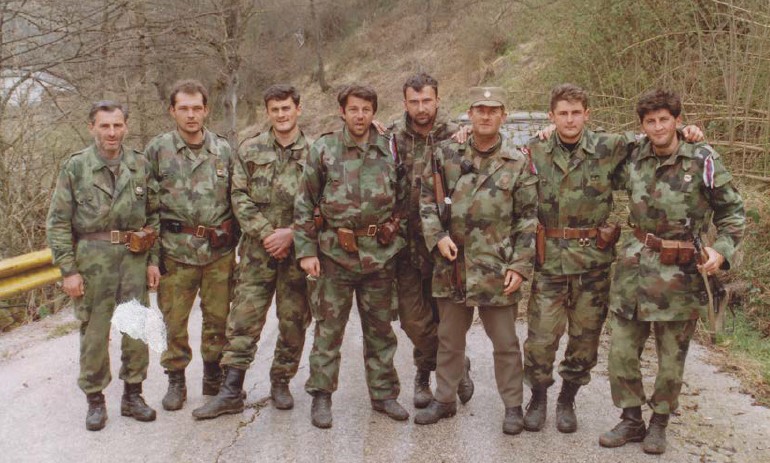
In the autumn of 1994, the entire Army of the Republic of Srpska (VRS) faced major challenges from the strategic initiative of Muslim and Croat forces — from Bihać, through Kupres and Majevica… The defence of positions in eastern Herzegovina was of great importance not only for the south of the Republic of Srpska, but also for the morale and self-confidence of VRS forces on other battlefields.
Sources and Literature:
-
- Предраг Лозо, Decisive Defense: The Mitrovdan Offensives against Eastern Herzegovina in 1992 and 1994, RCIRZ, Banja Luka 2021.
- Предраг Лозо, К’о ружан сан, задњи пут погледајте град, Злочини над Србима у Мостару и околини 1992-1995, РЦИРЗ, Бања Лука 2024.
- Зоран Јањић, Невесињска бригада у рату 1992−1995. године, Невесиње–Београд 2017.