


In September 1995, the Serbian people in the western part of Republika Srpska endured immense suffering. The loss of the Western Krajina municipalities brought about new crimes, suffering, and mass graves. Combined Croat-Muslim forces, supported by the NATO alliance, continued their operations with the intent of threatening Banja Luka, as well as the very existence of Republika Srpska and the Serbian people in this region.
The continuation of enemy operations in the Krajina territory
Following the defense of the northwestern borders in the municipalities of Kozarska Dubica, Kostajnica, and Novi Grad against Croatian attackers, the advance of Muslim forces was also partially halted. This occurred on September 23, 1995, when the VRS (Army of Republika Srpska) stopped the advance on the routes toward Prijedor, Novi Grad, and Mrkonjić Grad. An attempted counter-offensive followed under Operation 'Shield 95' (Štit 95). During this operation, VRS forces managed to reach the outskirts of Ključ, but this success was temporary. By early October, Republika Srpska forces remained under intense pressure.
Initiatives for signing an armistice
Under the initiative of the U.S. Administration and Richard Holbrooke, negotiations were held to establish a truce. On October 5, the Agreement for a Ceasefire in Bosnia and Herzegovina was reached and signed. On the Serbian side, the agreement was signed by the President of Republika Srpska, Radovan Karadžić, and General Ratko Mladić. The ceasefire was scheduled to take effect on October 10 at 00:00 hours and was intended to last for 60 days, or until the conclusion of the peace negotiations that had already been announced. However, the Muslim side insisted to the Americans that the ceasefire should instead take effect on October 12. They calculated that within that timeframe, they could capture Prijedor and Novi Grad.
The continuation of offensive plans
Even though ceasefire negotiations had been initiated, the Croat-Muslim coalition was planning new operations on the ground. Based on an agreement reached in Zagreb, they intended to capture Mrkonjić Grad, Sanski Most, Prijedor, and Novi Grad in a final blow in early October. Significant reinforcements from the Croatian Army (HV) were dispatched to those areas.
In the Croatian operation 'Southern Move' (Južni potez), which represented a continuation of the aggression against Republika Srpska by the Croatian Army (HV) and the HVO, significant forces were deployed. Their objective was Mrkonjić Grad and reaching the Manjača Mountain region in order to bring Banja Luka within artillery range. Simultaneously, Muslim forces operated in coordination with them. They planned an advance toward Sanski Most and Prijedor with the 5th Corps, as well as toward Kneževo and Kotor Varoš with the 7th Corps. These forces also shared the objective of reaching Mrkonjić Grad and Manjača.
The Fall of Mrkonjić Grad
On the third day of Operation 'Southern Move' (Južni potez), Croatian Army (HV) forces captured the territory of the Mrkonjić Grad municipality, which, along with the settlement of Bočac, fell on October 10, 1995. Following this, HV and HVO units largely shifted to defensive positions, although they occasionally carried out offensive actions without significant success. This marked the beginning of the occupation of Mrkonjić Grad—a period characterized by the capture and killing of soldiers and civilians, as well as unprecedented destruction, arson, and prior looting of Serbian property and assets.
Atrocities against Serbs in and around Mrkonjić Grad
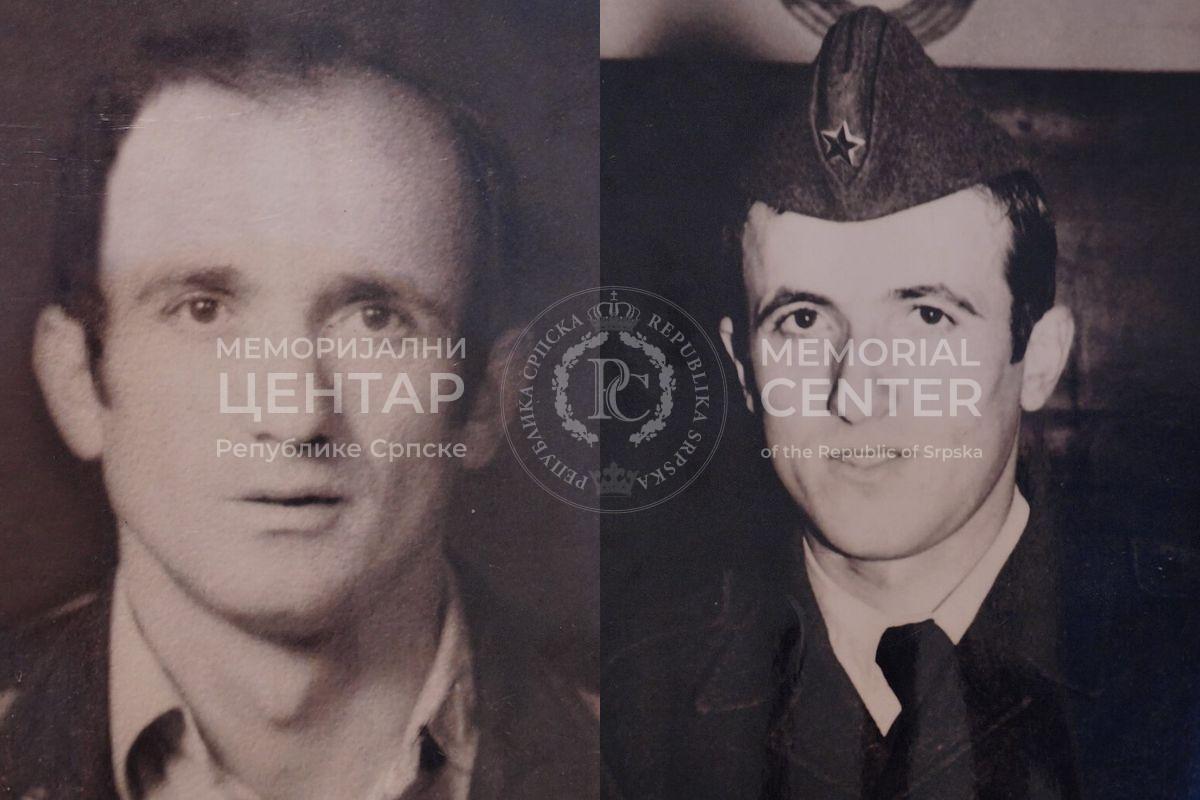
During the Croatian forces' offensive and the subsequent occupation of the Mrkonjić Grad municipality, a large number of Serbian soldiers and civilians were killed. Over 220 soldiers and members of the Republika Srpska Ministry of the Interior (MUP RS) perished, while the number of civilian victims exceeded 130. A portion of them were buried in a mass grave at the cemetery in Mrkonjić Grad, where 181 bodies were discovered. During exhumations and autopsies, it was established that many civilians and soldiers were killed at close range and that blunt objects were used for their execution and torture. Furthermore, documented evidence shows numerous injuries, such as crushed skulls and broken limbs on victims who had also been bound; meanwhile, only a few victims were killed by gunshots. It is evident that the killing of soldiers or civilians following their capture or surrender was widespread. One of the crimes that illustrates the nature of the Croatian forces' actions was the crime in the village of Surjan, where victims from that village and the village of Šehovci—mostly elderly, helpless, and immobile persons—were burned inside the house of Pantelija Grmaš.
The Fall of Sanski Most
Forces of the so-called 'Army of the Republic of B&H' (ARBiH) continued their Operation 'Sana 95'. The objective was to seize as much territory as possible before the implementation of the already announced ceasefire. Despite the efforts of the 5th Corps to launch immediate offensive operations, a turning point in favor of the Muslim forces did not occur until October 10. The 5th Corps forces broke through toward Sanski Most and entered the town on the night of October 10/11. Prior to this, amidst significant confusion and an unclear situation on the ground, Serbian civilians, the military, and the Command of the VRS 2nd Krajina Corps had withdrawn. Although the Muslim forces captured Sanski Most, VRS units managed to defend Prijedor and Novi Grad in the following days, while also establishing defensive lines around Banja Luka on the axes toward Mrkonjić Grad. Combat operations on the front ceased on October 15, 1995, although the ceasefire had formally come into effect on October 12, 1995.
In the Sanski Most area, three mass graves and 57 individual graves of Serbian victims related to the events of autumn 1995 have been documented. These also bear witness to the scale and nature of the crimes committed against the Serbs of this region, primarily by Muslim formations from the 5th Corps. A total of 289 Serbian victims have been recorded in the Sanski Most area, of whom 128 were civilians. In the wider area of the Muslim operation 'Sana 95', long after the war, 237 individuals were still listed as missing or unidentified.
Casualties at the War's End
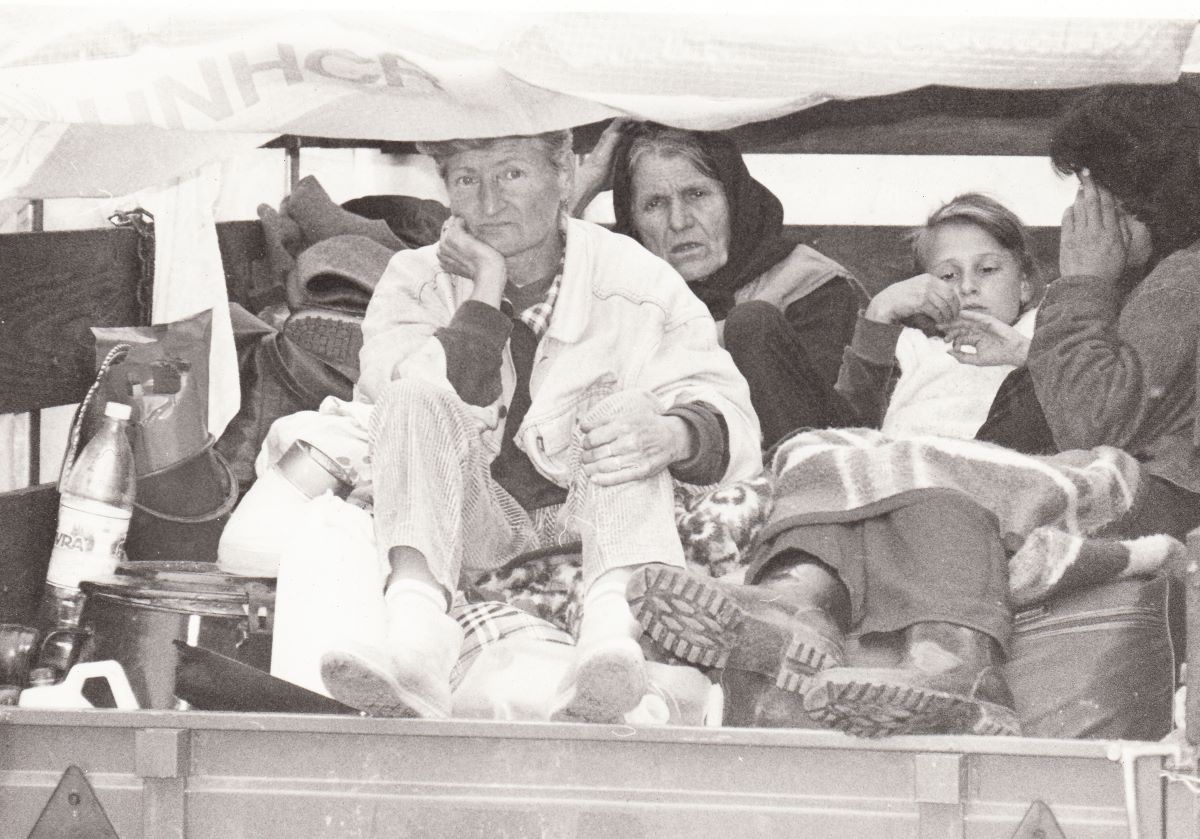
Thus, in the municipalities of Mrkonjić Grad and Sanski Most alone, which were occupied in October 1995, more than 650 Serbian civilians and soldiers were killed. This was the horrific toll of October, the penultimate month of the war, as the Dayton Peace Agreement was signed on November 21. Previously, during the months of August and September and following the fall of the Western Krajina municipalities, over 1,000 persons of Serbian nationality perished. Consequently, the total number of Serbian victims over these three months, along the axes of enemy military operations, exceeded 1,650.
Post-war Exhumations
Mrkonjić Grad remained under the occupation of Croatian forces until February 5, 1996, when, according to the Dayton Peace Agreement, it was returned to the fold of Republika Srpska. Upon returning to the destroyed and looted town, harsh scenes were found—remnants of an enemy system that spared neither property nor people. Beyond the initial shelling of civilian targets and the subsequent direct mass crimes, Mrkonjić Grad was also characterized by the organized removal of industrial plants, machinery, and equipment to Croatia and Herzegovina, carried out with the approval of the occupying authorities. This was particularly prevalent following the signing of the Dayton Peace Agreement.
The exhumation of the aforementioned mass grave containing 181 victims at the Orthodox cemetery in Mrkonjić Grad was carried out between March 30 and April 30, 1996, and it confirmed the criminal conduct of the Croatian formations. On this occasion, due to the condition of the remains, 45 victims could not be identified by medical experts or family members. Their bodies were re-exhumed in September 1997.
In the area of Sanski Most, which remained within the Federation of B&H, the largest mass grave was exhumed at the Greda Cemetery site in the settlement of Šušnjari between October 19 and 22, 1998. On that occasion, 72 bodies of Serbian victims were exhumed from this mass grave.
The families of the missing and the institutions of Republika Srpska are still searching for a significant number of victims' bodies from the events of October 1995.
Source:
- Бојан Димитријевић, „Војска брза као вјетар“, Војска Републике Српске у рату 1992-1995, Нови Сад, Београд, Бања Лука 2023, 363-372.
- Душан Кукобат, Бојан Димитријевић, 2. Крајишки корпус Војске Републике Српске, Друго допуњено издање, РЦИРЗ, Бања Лука 2022, 250-251.
- Мирко Матић, Јово Блажановић и Остоја Дулић, 30. ПЈЕШАДИЈСКА ДИВИЗИЈА ВРС, РЦИРЗ, Бања Лука 2020.
- Агресија Републике Хрватске на Републику Српску, окупација општине Мркоњић Град септембар 1995. – фебруар 1996. године, приредили Цвјетко Савић, Јанко Велимировић и Весна Ћелић, Бања Лука 2012.
- https://www.nestalirs.com/