

Following the signing of the Dayton Peace Agreement, under the direct influence of the West, a state of crisis was activated in Serbia within the territory of the Autonomous Province of Kosovo and Metohija. Albanian terrorist activity in this area intensified during 1996 and 1997; however, the crisis reached its peak in early March 1998. Over a period of three years, 1,845 armed attacks by Albanian terrorist groups were recorded. In 1,075 attacks, the targets were members of the Ministry of Internal Affairs (MUP) of the Republic of Serbia, while 745 attacks were directed at citizens and their residential or business properties, and 25 attacks targeted settlements or facilities where refugees resided. A total of 122 police officers and 242 civilians were killed, while 426 police officers and 179 civilians were wounded.
Liquidation of a Terrorist Group in Drenica
In March 1998, terrorist attacks intensified in the areas of Đakovica, Dečani, and Peć. On March 2, ten attacks were carried out on Serbian houses in the Klina and Đakovica areas, while large Albanian demonstrations were held in Pristina, Podujevo, and Vučitrn, to which the police responded with water cannons and tear gas to disperse the crowds. In those clashes, 45 demonstrators were injured. Finally, on March 6, a clash occurred that marked the definitive start of open war between the state and the rebels in the territory of Kosovo and Metohija.
After two police officers were killed and nine wounded in the Srbica area—specifically the village of Lauša—police forces attempted to destroy the terrorist group of Adem Jashari, one of the leaders of the terrorist KLA in Drenica, who was responsible for most terrorist acts in that region. In his home village of Donje Prekaze, fire was opened on the police following a blockade. Adem Jashari's house became the site of a battle in which 58 people perished, including Jashari himself; among the killed were women, children, and elderly persons.
One-sided approach of the West
Immediately after the liquidation of the Jashari group, an open reaction from American diplomacy followed. The U.S. President’s Special Envoy for the Balkans, Robert Gelbard, threatened Serbia with military intervention. It was evident that significant international involvement in the events in Kosovo and Metohija had begun. Within days, a meeting of the Contact Group followed, where everyone except the Russian representative supported the introduction of restrictive measures against Serbia. Later, on May 9, 1998, sanctions were returned to Yugoslavia, which had been lifted two years earlier.
Murders
During 1998, a large number of brutal murders of Serbs were committed in Kosovo and Metohija. Historian Nenad Antonijević cites specific cases of Serbian victims: "On May 4, 1998, Albanian terrorists massacred Nenad Jaredić, acting postmaster in the village of Dobra Voda, Klina municipality, with a knife and then shot him in the head. On May 20, they took the boy Dalibor Lazarević from the yard of his house in the village of Budisavci near Klina and killed him with a firearm. In the village of Kijevo, Klina municipality, on June 24, they killed Radoš Spasić (born 1945), the principal of the 'Laza Lazarević' Elementary School. Cveta Simić (born 1929) from the village of Pantina, Vučitrn municipality, was kidnapped from her home on June 26, tortured and raped, and then thrown by the Vučitrn–Pantina road on July 7 in an exhausted and unconscious state. She suffered blunt force head injuries and a stab wound to the neck, with visible signs of strangulation, as well as burns from a glowing object on her chest. She died from injuries sustained in captivity on August 19, 1998, at the Military Medical Academy in Belgrade."
Antonijević also mentions a case from early July 1998 during Albanian attacks on the villages of Opteruša and Retimlje near Orahovac. Among other atrocities, the mass rape of two Serbian women occurred, as well as the murder of Rajko Nikolić, who tried to resist the crime. "Albanian terrorists then ordered Rajko's 17-year-old son, Cvetko, to bring gasoline, which they then poured over the wounded Rajko and burned him alive."
Threats to the Border
In addition to terrorist attacks and crimes deep within the territory, 1998 was characterized by a large number of border violations on the frontier with Albania and attacks on the security forces of the FRY securing it. A total of 92 incidents were recorded, in which sabotage-terrorist groups from Albania attempted to cross the border illegally, smuggle weapons, and carry out attacks.
As the conflict on the ground flared up, the Yugoslav Army began to be deployed alongside the Ministry of Internal Affairs, primarily units from the Pristina Corps of the Third Army.
The international factor's stance remained largely biased; on September 23, 1998, the UN Security Council adopted Resolution 1199, demanding the immediate withdrawal of Yugoslav/Serbian security forces from Kosovo and Metohija. The next day, September 24, NATO adopted a plan for "potential Alliance action in Kosovo."
The Milošević–Holbrooke Agreement
Under extremely difficult and critical conditions, both on the ground and diplomatically, and under direct threat of bombing, an agreement was reached on October 13 between the President of the FRY, Slobodan Milošević, and the U.S. Special Envoy for the Balkans, Richard Holbrooke. Per the agreement and its implementation, American aviation was allowed to conduct reconnaissance missions over Kosovo and Metohija, and international verifiers were permitted on the ground. Yugoslav authorities also agreed to withdraw military and police forces so that no more than 10,000 police officers and 15,000 soldiers remained in the province. However, the arrival of the "verifiers" did not calm the situation; in the first month following the agreement alone, 117 terrorist attacks were carried out against the army, police, and civilians. One member of the Yugoslav Army, 11 members of the Serbian MUP, and two civilians died in those attacks.
On the night between December 13 and 14, 1998, Yugoslav border guards on the slopes of Paštrik near Prizren prevented a group of 153 terrorists from crossing from Albania into Yugoslavia during a multi-hour battle. In that incident, 41 terrorists were killed, about 40 were wounded, nine were captured, and a large quantity of weapons was seized.
The Terrorist Attack at the Panda Café in Peć
On December 14, in a terrorist attack at the Panda Café in Peć, six Serbian boys and young men were brutally murdered. Those killed were: Ivan Obradović (14), Vukota (Vukosav) Gvozdenović (16), Svetislav Ristić (17), Zoran Stanojević (17), Dragan Trifović (17), and student Ivan Radević (25). Vladimir Lončarević and the owner Mirsad Šabović were seriously wounded, while Nikola Rajović suffered minor injuries. The funeral for the murdered youths was held on December 16, 1998, at the cemetery in Peć. The funeral rite was served by Serbian Patriarch Pavle in the presence of a large number of people.
This terrorist act effectively marked the end of any truce activities based on the Milošević–Holbrooke agreement, and 1999 brought even greater conflicts, destruction, and crimes.
Kidnappings
A large number of kidnappings of Serbs and people of other nationalities were carried out in Kosovo and Metohija. People were abducted from their homes, workplaces, vehicles, while performing agricultural or other work, and during open attacks on towns and villages.
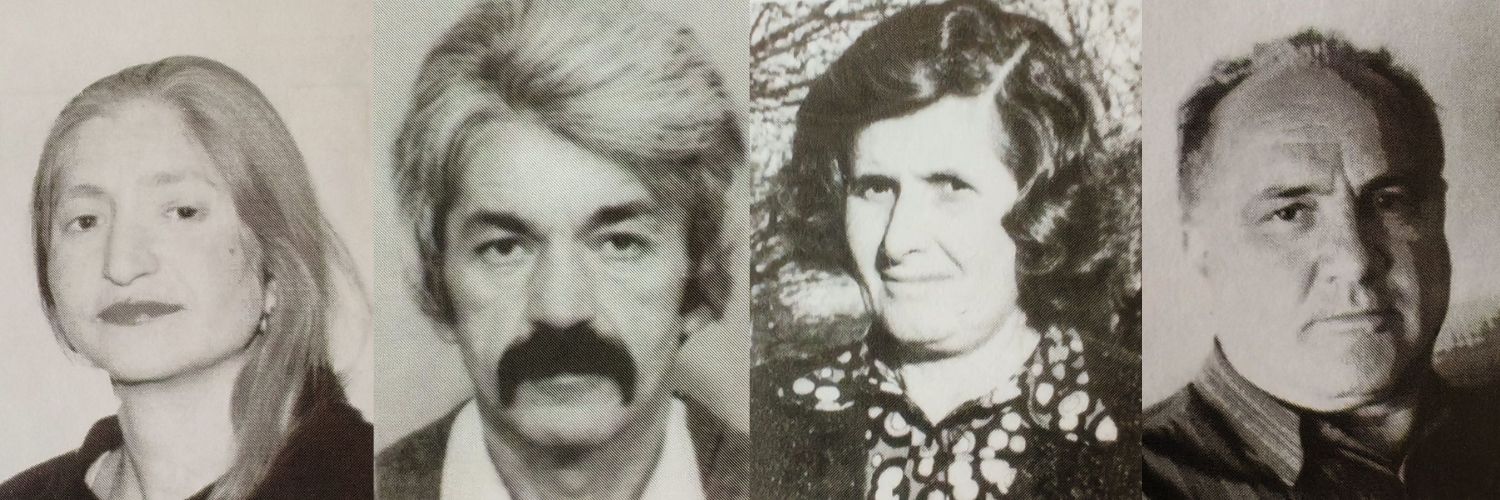
According to data from the Federal Ministry of Foreign Affairs of the FRY, between April 1998 and June 1999, 100 Serbs, 77 Albanians, and 12 people of other nationalities were kidnapped and went missing in Kosovo and Metohija. According to the Ministry of Internal Affairs of the Republic of Serbia, 14 police officers were kidnapped and went missing during the same period.
From June 10, 1999, to February 29, 2000, Albanian terrorists kidnapped a total of 860 persons in Kosovo and Metohija, including 822 civilians (796 Serbs and Montenegrins, 152 of whom remain unidentified; 37 Albanians, one of whom remains unidentified; and 27 citizens of other nationalities).
The bodies of a number of these individuals were identified in individual and mass graves, while many others are still being sought today and remain listed as missing.
Sources and Literature:
- Ненад Антонијевић, „СТРАДАЊЕ СРБА И ДРУГИХ НЕАЛБАНАЦА НА КОСОВУ И МЕТОХИЈИ (1998-2006)“, у: Прилози истраживању злочина геноцида и ратних злочина, Зборник радова, Уредник Јован Мирковић, Музеј жртава геноцида, Београд 2009, 157-212.
- Милан Гулић, Југословенска држава: 1918-2006, од Прводецембарског акта до Мајског референдума, Београд 2023, 911-912.