


The First Mitrovdan Offensive represents a major offensive operation by Croat-Muslim forces against the positions of the Army of the Republic of Srpska on the Mostar–Nevesinje axis in November 1992. The operation lasted from November 8 to 15, 1992. It received the name Mitrovdan Offensive because it began on the day of the celebration of the family patron saint’s day (slava) of the Holy Great Martyr Demetrius – Mitrovdan (celebrated on October 26 / November 8 according to the Julian/Gregorian calendars). After the new offensive by Muslim forces in November 1994, which was named the Second Mitrovdan Offensive, these events from 1992 have been designated in historiography and collective memory as the First Mitrovdan Offensive.
Transfer of the War from the Territory of Croatia
With the reduction of military tensions at the beginning of 1992 on the territory of the former Croatia, the Croatian leadership — after the Sarajevo Ceasefire — aimed to tie down as many JNA forces as possible on the territory of BiH, thereby easing its own secessionist goals. From that moment on, the development of the situation in Herzegovina became directly linked to Croatia’s involvement and intentions in these areas.
Fall of Mostar and the Neretva Valley
One of the results of Croatia’s transfer of the war was the active arming of the Croat and Muslim population, the formation of paramilitary units, and terrorist attacks on JNA facilities — primarily in western Herzegovina, Mostar and Čapljina. After the beginning of the conflict in April 1992 and the withdrawal of JNA units in May of the same year, Serbian formations became disorganised, leading to the fall of Mostar and the Neretva Valley during the Croatian operation “Čagalj” — i.e., the expulsion of the Serbian population — in mid-June 1992. The main role in this was played by Croatian formations of the HV Southern Front. This determined the entire subsequent character and development of events in Herzegovina during the Defence-Patriotic War.
Battle for Podveležje
The Battle for Podveležje was one of the events by which the forces of the then Army of the Serbian Republic of BiH — specifically the 10th Herzegovina Motorized Brigade (10th hmtbr), later renamed the 8th hmtbr or the Nevesinje Brigade of the VRS Herzegovina Corps — secured the stabilisation of the battlefield after the fall of Mostar and created the preconditions for future successful operations. The battle lasted from June 17 to July 10 in the area of the Podveležje plateau, which consists of a series of villages inhabited predominantly by a Muslim population. This plateau, a significant expanse between Mostar, Mount Velež and Nevesinje, represented one of the key spaces — a strategic pivot — on the Mostar–Nevesinje axis of the Herzegovina battlefield.
After the Battle for Podveležje, the front line on the Mostar–Nevesinje axis was largely stabilised. The situation remained largely unchanged until the autumn of 1992, when Croat-Muslim forces launched the largest operation to date on this part of the battlefield. The situation on the Southern Front was favourable for the HV, especially after the successes achieved on the Dubrovnik–Trebinje section of the front in mid- and late October.
Операција „Бура“
The bulk of the attacking forces in Operation “Bura” (named after the identically named Ustaša German-Croatian action in the vicinity of Mostar in 1944 against partisan forces) consisted of HVO and HV units, whose actions were maximally coordinated. A significant number of Muslims were present in the HVO units, but during the autumn of 1992, Croat-Muslim relations became increasingly strained, and mutual distrust grew ever greater. The attacking forces had multiple numerical superiority in manpower, and especially in artillery weapons. The ratio reached as high as 10:1.
One of the main objectives of the attackers in this operation was to cut off and break up the forces of the Nevesinje Brigade, which consisted of troops from Nevesinje, Mostar and other places in the Neretva Valley and Herzegovina. In a broader sense, the main goal was to seize the heights above Mostar, Stolac and the Dubrava Plateau, which were under the control of the Army of the Republic of Srpska, thereby creating conditions for a new expulsion of the Serbian population. The command staff of the Croat-Muslim forces expected that a breakthrough of the first lines would also threaten Nevesinje itself, and that continued action could endanger the entire territory of eastern Herzegovina. Should such a development occur, the attacking forces would create the preconditions for the deblockade of the Goražde area, as well as for an attack on the Sarajevo-Romanija Corps of the VRS.
The commander of the HV Southern Front, General Bobetko, issued an order on October 9, 1992, for the preparation of Operation “Bura”. On that occasion it was emphasised: “The objective of the operation is the defence of the left bank of the Neretva, the expulsion of the enemy beyond the range of artillery from the towns of Mostar and Stolac, and the shifting of the forward defence line to Dvrsnik and Žegulja.”
Attacks on the Bileća Brigade of the VRS
In the period before the actual start of the Mitrovdan Offensive, as well as throughout its duration, the Bileća Brigade of the VRS endured fierce attacks by Croat-Muslim forces and suffered personnel losses, but its defence did not waver. The actions that preceded the beginning of the offensive served as a form of preparation for the forces that later carried out the offensive operations, while at the same time stretching and tying down Serbian forces on the southern end of the front.
Mitrovdan, November 8, 1992
The main assault by the Croat-Muslim forces came in the early morning of November 8, 1992, on a cloudy and chilly Sunday. On that day, the families Buha, Andrić, Mandić and Magazin from Nevesinje were celebrating their family patron saint’s day (slava) — Mitrovdan, in honour of the Holy Great Martyr Demetrius.
In an urgent report to the Main Staff of the Army of the Republic of Srpska on November 8, the Command of the Herzegovina Corps stated: “In the morning hours (around 6:00 a.m.), the enemy launched a strong attack along the entire front of the Nevesinje Brigade, supported by intense artillery fire from the area of the left and right banks of the Neretva (Blagaj, Kosor (airfield), Goranci, Dobro Selo, Bijelo Polje). According to available information, they also infiltrated part of their forces into our disposition. They shelled the town of Nevesinje with 130 mm guns.”
Artillery Salvos
With artillery strikes of great intensity along a fire line stretching over 100 km, the attackers sought to paralyse VRS forces not only on the main axes of attack, but also outside the zone of responsibility of the Nevesinje Brigade. On the right flank, this was in the area of responsibility of the 2nd Light Herzegovina Infantry Brigade — that is, in the areas of Konjic municipality towards Nevesinje. On the left flank, these were the already mentioned territories under the control of the Bileća Brigade: Mount Hrgud and south of Stolac — Dvrsnik and Veliš.
Barrage fire from 500–700 artillery pieces, which defenders most often describe as horrific and unbelievable, while HV documents refer to it as “enormous artillery support,” lasted for several hours before the infantry assault. The attackers hoped that after such preparation the infantry would not have much work to do. The initial artillery strike also disrupted the communications system. Due to severed landlines and active jamming, major problems arose. However, through active and timely efforts, as well as simulation of links that the attackers were attempting to mimic, the communications system was restored to an optimal level already during the day. During the attack, pre-prepared enemy sabotage and diversionary groups were also actively operating.
Infantry Attacks
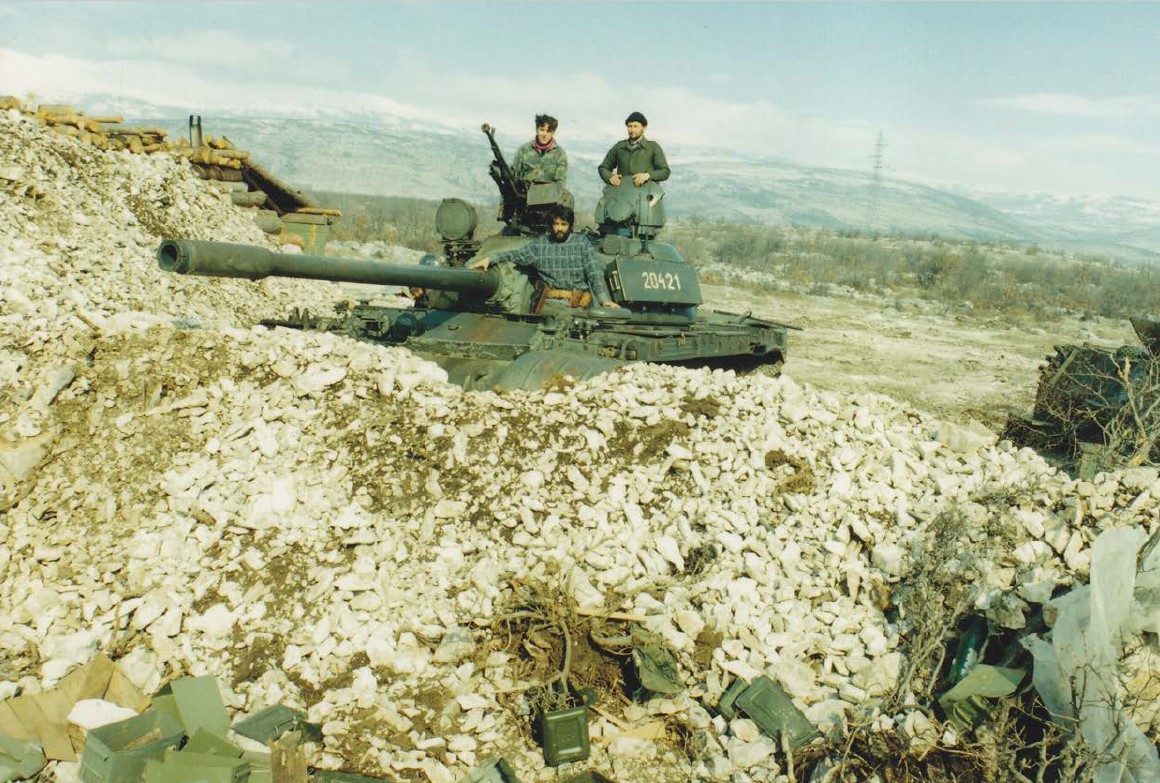
After heavy artillery strikes and the infiltration of saboteurs into the disposition of the Nevesinje Brigade under the command of Colonel Novica Gušić, infantry offensive actions followed. The main thrust of the Croat-Muslim forces’ offensive operations was directed at the line of villages Gornji Vraćevići – Kamena – Rabina, where positions were held by the 4th Battalion under the command of Ranko Prodanović (who was seriously wounded by an artillery shell on the first day of the offensive while defending the positions). The Croat-Muslim forces had the greatest concentration of infantry in the area of the village of Čomori. These units were tasked with attacking the positions of the 4th Battalion of the Nevesinje Brigade. In the village of Čomori were the positions of the 1st Company of the 4th Battalion (“Bileća Volunteers” under the command of Rade Radović). There, at the site of the “White House” and around other buildings, fierce multi-day infantry battles took place. Strong attacks were also carried out in the area of Šipovac and other places in Podveležje, where the defence was commanded by the commander of the 2nd Battalion, Captain Zoran Purković. A significant volume of attacks on the first day in the zone of responsibility of the 2nd Battalion also continued at Dražnjača, Sveta Gora and Merdžan Glava. However, apart from the position at Šipovac — which was retaken by the VRS after the initial strike — the other positions remained unchanged.
Situation in Nevesinje
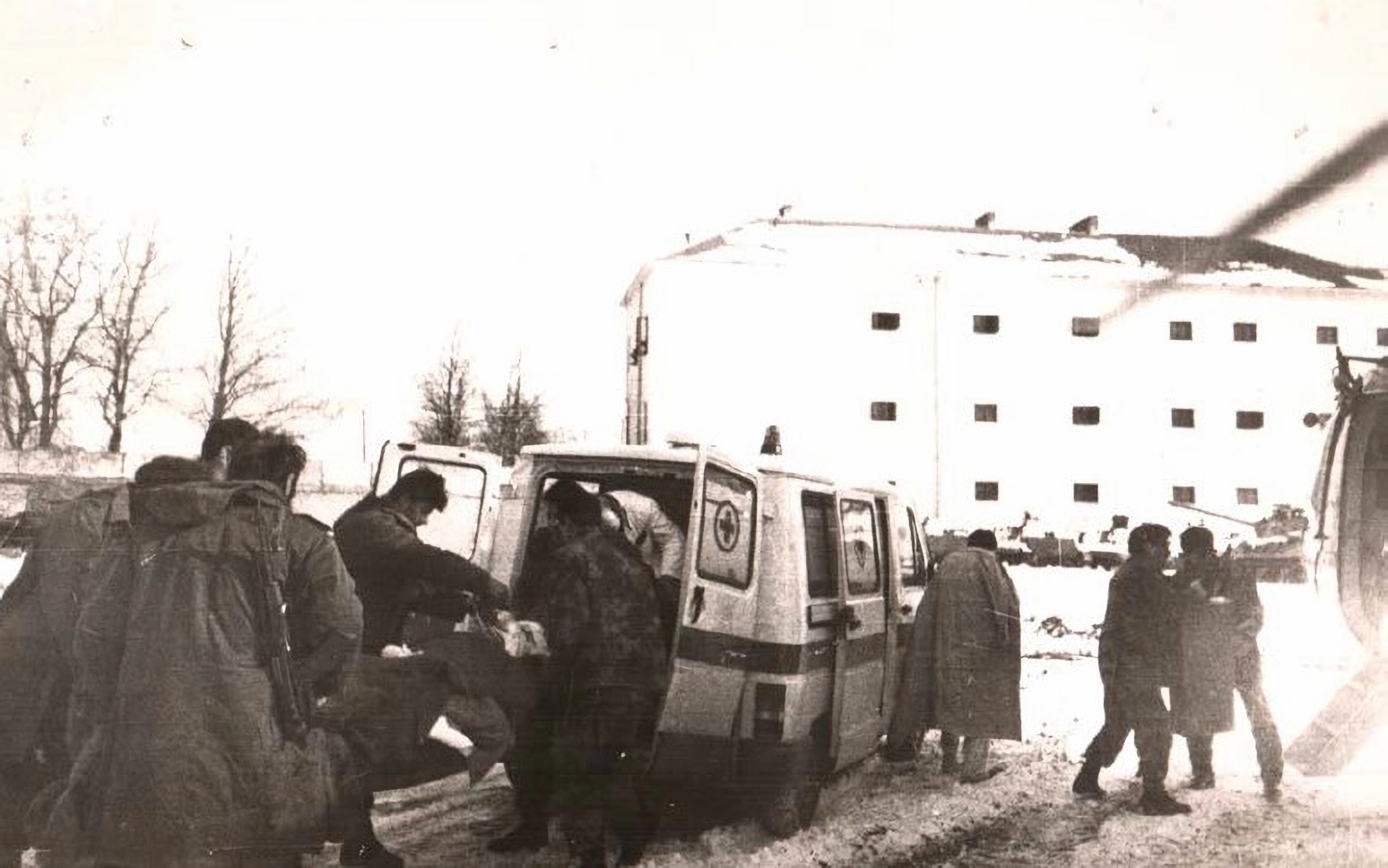
The news spread quickly to the residents of Nevesinje, where a state of emergency was in force and where the population became aware that fierce fighting was taking place on all positions. At the onset of winter 1992, the Nevesinje municipality, in addition to its own population of around 11,000, also served as a refuge for approximately 15,000 Serbs expelled from Mostar and other places in the Neretva Valley. The town itself was exposed to shelling by Croatian artillery, which caused civilian casualties. Reinforcements for the threatened units in the field began moving already from noon. Soldiers bringing reinforcements informed the front lines about the specific state of emergency and the readiness of the citizens of Nevesinje — that is, the civilian population — for a decisive defence and contribution to the fighting, which further strengthened the morale of the fighters.
Attacks Continue
The failure of the attacks on the first day, and then in the following two days, largely determined the final outcome of the operation. During the enemy offensive, the intensity of the attacks was not the same as at the beginning, but combat tension was maintained. “The enemy moved tank units to the forward edge of Serbian forces, attacked from the front on various axes, infiltrated sabotage groups into the combat disposition of Serbian forces, jammed radio communications, and carried out various psychological and propaganda actions through their media (showing footage of the alleged entry of ‘units’ into Nevesinje), but all of this proved unsuccessful… The overall situation was made worse by rain and a sudden drop in temperature that hit Herzegovina in those days.” The result of the large Muslim-Croat offensive was that after several days of heavy attacks, the VRS defence line was not moved anywhere, except at elevation point 690, which was recaptured in January 1993 in a well-planned and lightning-fast action.
Reinforcements / Assistance to the Brigade
Direct manpower assistance to the Nevesinje Brigade during the days of the offensive was provided by the 2nd Light Infantry Brigade from Borci, from where combat groups arrived for reinforcement throughout the days of the offensive. The Nevesinje Brigade also received help during the offensive from the Republic of Srpska Police from the stations in Nevesinje and Gacko. From the Herzegovina Corps’ support units, assistance to the brigade came from the Reconnaissance-Sabotage Detachment, the Military Police Battalion, and the Signals Battalion. A significant role in neutralising enemy artillery units was played by the 13th MAP, which in critical moments operated as if it were one of the units of the Nevesinje Brigade.
Human losses
In direct combat operations, 38 soldiers and officers were killed. About fifteen days after the offensive, a member of the Reconnaissance-Sabotage Detachment of the Herzegovina Corps died in the Clinical Centre Podgorica from the consequences of his wounds. During the preparations for the offensive and in the immediate events following it, another two soldiers and one civilian were killed in Nevesinje by enemy shells. While departing to exchange the remains on November 18, 1992, in the Brštanik area, Stolac municipality, one soldier was killed by an anti-personnel mine. All this brings the total losses to 42. Approximately 200 soldiers and officers, along with five civilians in Nevesinje, were seriously and lightly wounded.
The following soldiers were killed: Radan Adžić, Dragiša Bogdanović, Blagoje Bošnjak, Radivoje Vučinić, Milimir Vučković, Danilo Glušac, Mirko Gutić, Miomir Dangubić, Milorad Đurović, Željko Zirojević, Milan Ijačić, Branko Ivković, Jovan Jonlija, Nikola Kadijević, Miodrag Kovačević, Slobodan Kulaš, Danilo Lozo, Sreto Matrak, Žarko Matrak, Saša Milenković, Slobodan Milošević, Zdravko Milošević, Severin Miljanović, Lazar Mirić, Zoran Muratović, Milan Pavlica, Blažo Perin, Branko Pjaca, Miodrag Popović, Radomir Radulović, Miodrag Rogan, Vojin Romović, Milorad Samardžić, Dragan Skočajić, Žarko Spremo, Tomislav Todorović, Miloš Čabrilo, Spasoje Čampara, Vaso Čovilo, Miodrag Šešelija, Jordan Šinik, as well as the civilian Gojko Vujinović.
Croat-Muslim losses in this action were never publicly disclosed, except for the fact that they were multiple and very painful for the attackers.
Recognitions
After the operation, a high-ranking envoy arrived in Nevesinje — the Vice President of the Republic of Srpska, Nikola Koljević — to provide support and coordinate further defence actions in Herzegovina. The Commander of the VRS Main Staff, General Ratko Mladić, personally contacted the brigade commander and expressed his support for the defence of Nevesinje and Herzegovina. The brigade was also praised by the Command of the Herzegovina Corps. When determining the new numerical designation of the brigade in the spring of 1993, there was no dilemma. November 8 was the most significant date in its existence. From then on, the brigade officially carried the name 8th Herzegovina Motorized Brigade (8th hmtbr). On June 28, 1993, the brigade was decorated by the President of the Republic of Srpska with the Order of Nemanjić, as one of the first units of the Army of the Republic of Srpska. The order is awarded for “outstanding heroic deeds in armed combat or a particularly significant contribution to the organisation and conduct of the defence of the Serbian people and to the establishment of the statehood of the Republic of Srpska,” with the motto “To Our Heroes.” Mitrovdan is the Day of Nevesinje Municipality, and the Veterans’ Organisation of the Republic of Srpska celebrates that day as its family patron saint’s day (slava). As part of the commemoration of these holidays, a monument to Colonel Novica Gušić was unveiled in Nevesinje in 2020. This act paid tribute to the commander of the Nevesinje Brigade during the First Mitrovdan Offensive.
Mitrovdan
Сам датум почетка акција у периоду Крсне славе Светог Великомученика Димитрија Солунског, и трајање у периоду од 8. до 15. новембра 1992. године одредио чињеницу да су се ови догађаји, прво у колективној свијести и памћењу, а онда и у науци назвали Митровданска офанзива. Након новог напада муслиманских снага у новембру 1994. године митровданске офанзиве се називају Прва и Second Mitrovdan Offensive.
Sources and Literature:
-
- Предраг Лозо, Decisive Defense: The Mitrovdan Offensives against Eastern Herzegovina in 1992 and 1994, RCIRZ, Banja Luka 2021.
- Георгије Вулић, Борбена дејства Херцеговачког корпуса ВРС 1992. године, РЦИРЗ, Бања Лука 2024.
- Зоран Јањић, Невесињска бригада у рату 1992−1995. године, Невесиње–Београд 2017.