


The character of the efforts of the Croatian leadership and its secessionist activities in the 1990s, with the aim of creating an ethnically homogeneous Croatian state without the rights of even a small number of Serbs to autonomous or any other organization, is illustrated by the transcripts from the meeting of Franjo Tuđman with other representatives of the military and political leadership of Croatia, held on July 31, 1995, at Brijuni, during the final preparations for Operation "Storm." "To strike such blows that the Serbs practically disappear, that is, that what we do not immediately capture capitulates in a few days," said the then-President of Croatia, Franjo Tuđman.
In the continuation, when civilians were discussed, it was said, among other things, that they should be "ostensibly guaranteed civil rights." These are only small excerpts that speak of what marked the main intentions of Operation "Storm," which was formally stated to serve the establishment of authority over the entire territory of Croatia.
Military operations as preparation
This operation was preceded by Croatian military actions on the territory of the former Bosnia and Herzegovina, i.e., attacks on Republika Srpska. In early June, Operation "Leap" (Skok) began, followed later in late July by Operation "Summer 95" (Ljeto 95), which were directed from the direction of Livno toward Grahovo and Glamoč. In the meantime, the Croatian and Muslim leadership from the so-called RBiH signed the Split Agreement as a formal basis for joint action. Grahovo was captured on July 28, and Glamoč on July 29, and Croatian forces continued their actions toward Drvar and Dinara, placing RSK forces in the Knin area in a tactically unfavorable position.
"Storm"
The Croatian operation "Storm," carried out with US approval and the support of NATO structures, began on August 4, 1995, around five o'clock in the morning. The action was carried out despite the fact that a large area of the RSK was under UNPROFOR protection (Sectors "South" and "North") and that a day earlier, representatives of the Republic of Serbian Krajina in Geneva and Belgrade had accepted the international community's proposal for a peaceful resolution of the conflict.
In large-scale attacks, simultaneously from 31 directions, on the western part of Krajina, about 184,000 members of the Croatian forces participated, with the support of part of the forces of the so-called ARBiH and HVO, while they were opposed by about 25,000 members of the Serbian Army of Krajina. It was an extremely uneven ratio of force between the attackers and the defensive forces, which, even in the first hours of the action, managed to offer serious resistance at certain points.
Refugee columns
Already in the first hours of the operation, large-scale artillery strikes were launched on civilian and military targets in the RSK, which continued in the following period and particularly demoralized the population and defenders. As the day progressed, the lines became increasingly unstable due to declining morale and strong enemy attacks. After the breakthrough of Croatian forces on several significant axes, the decision was made in the afternoon to withdraw the civilian population of the municipalities of Knin, Benkovac, Obrovac, Drniš, and Gračac toward Donji Lapac. Refugee columns headed for Republika Srpska, and then further into Serbia.
Collapse of RSK forces
Particularly significant resistance was offered by Serbian forces in the Banija region, where the attacker, after unsuccessful attempts on the first day, had to reorganize, change command structures, and bring in new forces on the second day.
However, the withdrawal of the population from the western part of the RSK in the face of attacks further disorganized the military resistance, followed by the withdrawal of official bodies and representatives of the military and political leadership of the RSK; thus, Croatian forces entered Knin on the morning of August 5, 1995. This was followed by the fall of Drniš, Benkovac, Gračac, Obrovac, and Plaški, and the next day, Korenica, Slunj, Glina, Petrinja, and Kostajnica.
On the fourth day of the operation, August 7, Croatian forces occupied Donji Lapac, Krnjak, and Vojnić. The defeat of the Serbian Army of Krajina was symbolically marked by the surrender of the 21st or Kordun Corps of the SVK on August 8, 1995, near Topusko, while Croatian forces established control over Vrginmost and Dvor on the following day, August 9.
Crimes
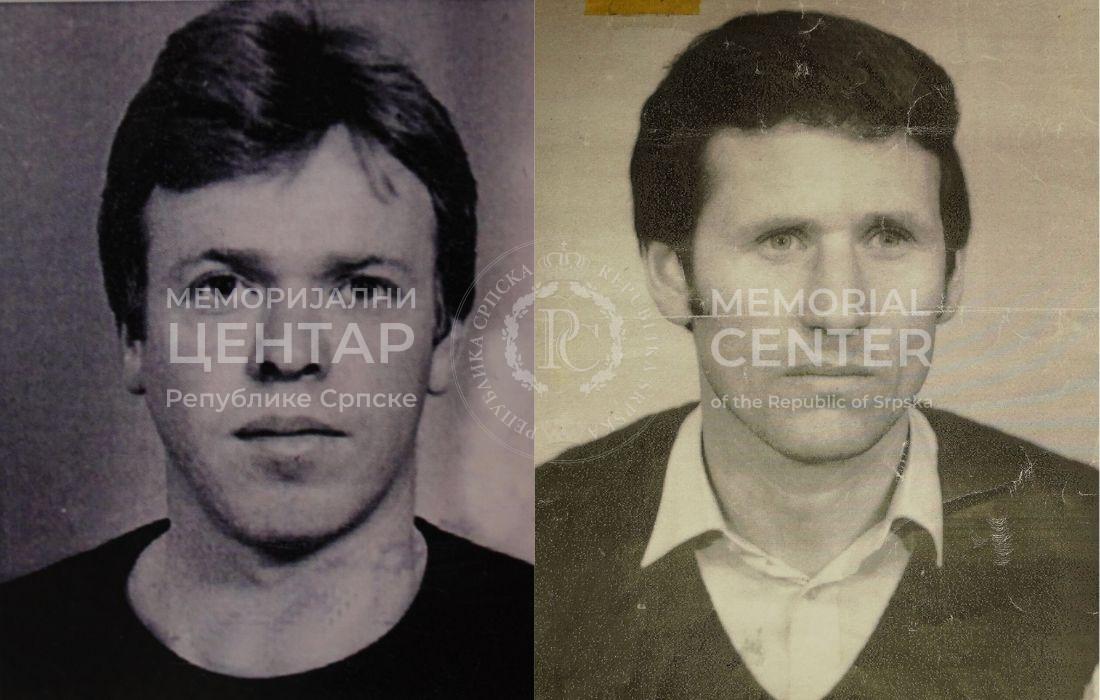
During these events in Operation "Storm," about 220,000 Serbs were expelled from the western part of the RSK, i.e., from the areas of Northern Dalmatia, Lika, Kordun, and Banija, by Croatian forces. During the operation and immediately after it, 1,853 Serbs were killed or disappeared, including 1,202 civilians. The greatest crimes committed during Operation "Storm" occurred in: Golubić (near Knin), where 22 people were killed on August 6; Kijani (near Gračac), where 14 Serbs, including nine women, were killed on the same day; and Dvor, where 12 people were killed on August 8, most of whom were psychiatric hospital patients who had tried to take shelter in a school building. These killings took place near members of the international forces from Denmark, who later testified about this crime.
In addition to these crimes, a series of other individual and mass murders were committed. Several dozen Serbs were killed when a refugee column was intercepted on the road through Donji Žirovac. Refugee columns were bombed outside the territory of Croatia, in the territory of Republika Srpska, in the village of Janjila near Bosanski Petrovac on August 7, 1995, and in the village of Svodna near Novi Grad on August 8, 1995. In the attack on the "Petrovačka cesta" road, 10 people in the column were killed, including four children, while more than 50 people were wounded. In Svodna, three people were killed during the bombing.

Looting, destruction of property, and hindering the return of Serbs
The restoration of Croatian authority in the former RSK area was accompanied by thorough looting of remaining movable property, as well as the burning of previously looted houses. Estimates suggest that in the former Sector South alone, about 22,000 houses were burned. In various historical sources and analyses, the subsequent prevention and obstruction of the return of expelled Serbs to the areas where this action took place is considered a continuation of the actions demonstrated in "Storm."
The difficult position of the VRS
Besides the collapse of the western part of the RSK through "Storm," the Republic of Western Bosnia was militarily defeated during these August days, as the forces of the Muslim Fifth Corps of the ARBiH, centered in Bihać, attacked the positions of their compatriots and occupied Velika Kladuša. This also worsened the positions of the Army of Republika Srpska, which, in these events related to the fall of the RSK territories, gained a new 250-kilometer front line. These events definitely changed the strategic initiative in the west of Republika Srpska.
The question of Slavonia, Baranja, and Western Srem
After Operation "Flash," "Storm" practically marked the victory of Croatian forces over the RSK, but the issue of the Srem-Baranja Region in the eastern part toward SR Yugoslavia remained open, which continued to exist as a remnant of Krajina. Under pressure on local Serbs, the Basic Agreement on Eastern Slavonia, Baranja, and Western Srem (the Erdut Agreement) was signed in Erdut on November 12, 1995, providing for the peaceful and gradual reintegration of that area into the constitutional and legal order of Croatia. The process of peaceful reintegration of these territories officially began on January 15, 1996, and ended two years later, on January 15, 1998. Although the reintegration was carried out peacefully, 77,316 people of Serbian nationality emigrated from the Srem-Baranja Region out of a total of 128,316.
Judicial (In)justice
The judicial processes for crimes committed in "Storm" were accompanied by a series of controversies and observations from different perspectives. DIC "Veritas" from Belgrade, which has been researching and documenting the suffering of Serbs from the RSK and Croatia for many years, stated on August 1, 2025, among other things: "Three Croatian generals were tried for crimes against Serbs in 'Storm' before the International Criminal Tribunal for the former Yugoslavia (ICTY). The Trial Chamber unanimously concluded that two of the three accused generals (Ante Gotovina and Mladen Markač) were participants in a joint criminal enterprise whose common purpose was the permanent removal of Serbian civilians from Krajina by force or threat of force, and sentenced them to long prison terms. However, the Appeals Chamber, by a narrow majority of three to two, overturned the first-instance verdict and acquitted the accused generals of all counts of the indictment."
"The International Court of Justice (ICJ), in the reasoning of its judgment from February 2015, qualified Operation 'Storm' as an act of ethnic cleansing—the Croats wanted Serbian territory without Serbs, expecting them to leave on their own rather than to 'destroy them in whole or in part.' To force them to leave their centuries-old homes, they shelled their cities and refugee columns, killed and physically and psychologically abused remaining civilians and soldiers, and prevented their return. However, all of this together, according to the court's assessment, did not reach the level of genocide (lacking 'genocidal intent')."
Symbol of crime
The ethnic cleansing of Serbs from Croatia, which reached its culmination with this operation, was one of the largest crimes in Europe after the Second World War.
Sources and Literature:
- Милан Гулић, Југословенска држава: 1918-2006, од Прводецембарског акта до Мајског референдума, Београд 2023, 852-857.
- Бојан Димитријевић, „Војска брза као вјетар“, Војска Републике Српске у рату 1992-1995, Нови Сад, Београд, Бања Лука 2023, 333-334.
- https://www.veritas.org.rs