


A large-scale Croatian attack on Western Slavonia, which was part of the territory of the Republic of Serbian Krajina (RSK), was carried out in early May 1995. An incidental situation was used as the official pretext. Namely, according to a previously reached Economic Agreement between the warring parties, a section of the Belgrade–Zagreb highway passing through Western Slavonia under the control of RSK forces had been opened to traffic.
As historian Milan Gulić writes, a series of incidents were recorded on the highway, culminating on April 28 when a Serb, Tihomir Blagojević, was killed near the Slaven Motel, not far from Nova Gradiška. In a sign of revolt, his closest relatives opened fire on vehicles passing along the highway. Three people were killed, and several others were wounded and/or captured. That same evening, the RSK authorities made the decision to close the highway. This move was used as the pretext for the decision to launch the operation under the code name "Flash" (Bljesak) on April 29, 1995.
Operation "Bljesak"
This brief military operation by Croatian forces called "Bljesak," carried out on May 1 and 2, 1995, lasted only about thirty hours. It ended with the collapse of the 18th Corps of the Serbian Army of Krajina, which was responsible for this part of the territory. The area had a very specific geographical layout, practically surrounded by Croatian territories, making it unfavorable for defense, and with a population that mostly retreated or was expelled across the Sava River into Republika Srpska.
This territory, consisting mainly of the Okučani municipality and parts of the Pakrac municipality, was under United Nations protection according to previously signed ceasefire agreements. However, the UN Protection Forces, having been previously warned and informed of the attack by Croatian generals, withdrew to safe locations, practically leaving the population they were supposed to protect at the mercy of Croatian forces. The balance of power is best illustrated by the fact that more than 16,000 members of the Croatian armed forces moved against approximately 15,000 Western Slavonian Serbs, of whom about 4,000 were soldiers.
Victims, Suffering, and the Retreat Toward the "Bridge of Salvation"
According to data from the "Veritas" Documentation and Information Center in Belgrade, led by Savo Štrbac, which has dealt with Serbian suffering in the RSK for many years, 283 people were killed during this operation. Among them were civilians, women, children, and the elderly. More than 15,000 Serbs from the area of Western Slavonia, where Serbs had lived for centuries, were forced to leave their homes. Most of the victims were killed while attempting to withdraw toward the "Bridge of Salvation" (Most spasa) across the Sava River, toward Gradiška in Republika Srpska. That bridge was under constant artillery fire, and some even attempted to swim across the river.
According to statements from surviving witnesses, columns of Serbian refugees on the road to the "Bridge of Salvation" on the Sava River were struck by aerial bombs, "Maljutka" missiles from helicopters, artillery shells, and sniper bullets... According to the testimonies, the wounded were slaughtered or even crushed by tank tracks.
Victim Structure and Mass Graves
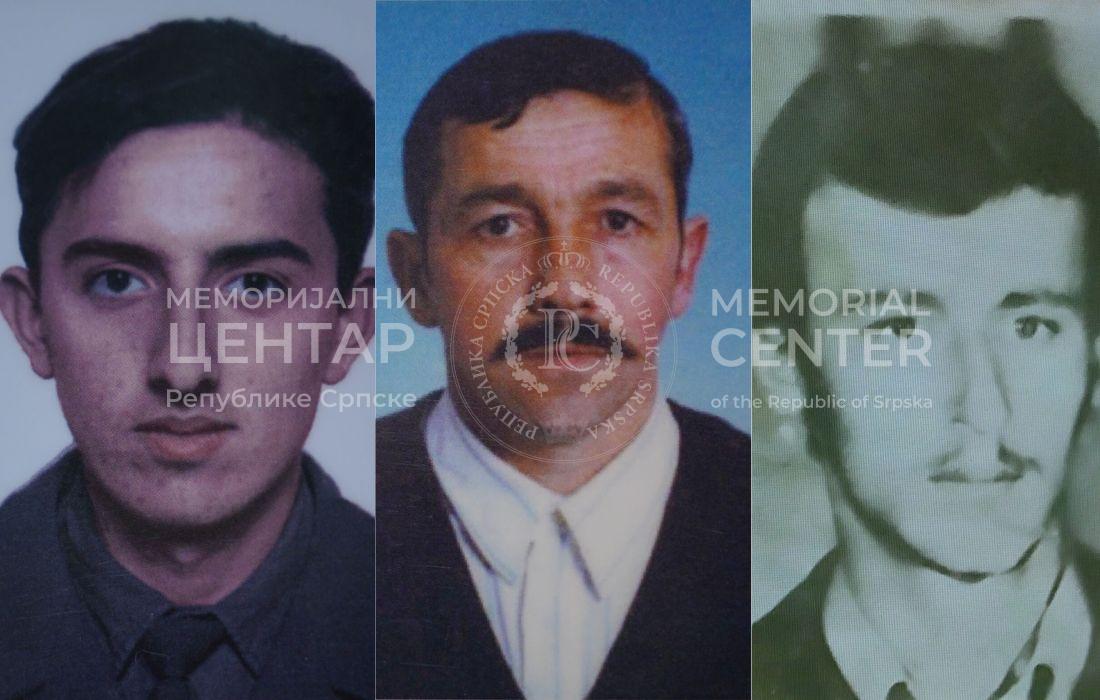
During research into the structure of the victims, DIC "Veritas" found that the victims included 56 women, eight children under the age of 14, and 75 people over the age of 60. Out of the total number of victims, the fate of 174 has been clarified, while 109 are still listed as missing, including 46 civilians, 23 of whom were women. Of the 150 remains exhumed from group graves, 122 bodies have been identified. There are 28 exhumed but unidentified victims, and unknown grave sites—individual or mass graves—are still being sought for 81 sets of remains. Among individual locations, two villages with a predominantly Serbian population suffered the most: Medari, where 22 victims were recorded, including 11 women and three children, and the village of Paklenica, which had 20 victims.
The scale of the suffering is also illustrated by the case of the families of the Vuković brothers from Medari, where Ranko and his wife Anđelija were killed along with their children Goran and Gordana, who were eleven and eight years old, as well as Milutin and his wife Cvijeta and their seven-year-old daughter Dragana.
Arrests, Camps, and Abuse
During these events in the Croatian operation "Bljesak," about 1,500 Serbs were arrested, and many of them spent the following years in prisons and camps for Serbs in Croatia. A large number of members of the Serbian Army of Krajina were captured practically through deception and with the help of UN protection forces, and since then, many have undergone severe psychological and physical abuse in Bjelovar and Varaždin. At that time, Croatian courts sentenced a large number of imprisoned Serbs to long-term prison sentences for alleged war crimes. They served their sentences in the notorious Lepoglava prison, and several dozen prisoners were detained for a long period in the infamous "Lora" camp in Split.
Serbian civilians who could not or did not want to leave their homes were placed in camps for civilians, while during that time, Serbian cultural heritage, Orthodox churches, and Serbian properties were looted, devastated, and destroyed. Soon, these civilians, with the help of UN protection forces and humanitarian organizations, were transported to Republika Srpska and Serbia.
UN Reactions, International Aspect, and Consequences
The UN Security Council, in Resolution 994 of May 17, 1995, demanded that Croatia withdraw its forces from the UN-protected zone and called on the conflicting parties to withdraw from the separation zone established by the 1994 Zagreb Ceasefire Agreement. Croatia ignored this resolution, as it had almost no ultimate character nor did it prescribe punitive measures. Practically, the mentioned resolution was of a purely formal nature.
Although in May 1995, as well as in later years, the Croatian leadership claimed that the goal of the operation was to establish constitutional and legal order on the territory of Croatia, the Serbian side and numerous international observers pointed to gross violations of international law, especially regarding the protection of civilians and prisoners of war. No one has been held legally accountable for the crimes against Serbian civilians and soldiers.
As a form of retaliation for this operation, the President of the Republic of Serbian Krajina, Milan Martić, ordered the rocket attacks on Zagreb and other places in Croatia, which caused deaths and injuries among civilians.
During the execution of the Croatian action "Flash," which has been labeled as ethnic cleansing by many researchers, the forces of the Army of Republika Srpska did not get involved in the defense of Western Slavonia to any significant extent or in an active form. The action demonstrated Croatia's intention, despite numerous negotiations, to act against the Republic of Serbian Krajina with rapid attacks and large-scale actions with proactive Western support, despite numerous Serbian casualties and destruction.
Source:
- Милан Гулић, Југословенска држава: 1918-2006, од Прводецембарског акта до Мајског референдума, Београд 2023, 849-850.
- veritas.org.rs