


Konjic is a strategically very important place at the crossroads between Herzegovina and Bosnia, on the vital communication line between Sarajevo and Mostar. During the Second World War, in the period of the Genocide against Serbs in the NDH, the Serbian population of Konjic suffered significant losses.
Konjic is a strategically very important place at the crossroads between Herzegovina and Bosnia, on the vital communication line between Sarajevo and Mostar. During the Second World War, in the period of the Genocide against Serbs in the NDH, the Serbian population of Konjic suffered significant losses. Muslims in this municipality, which according to the 1991 census had 43,878 inhabitants, were the majority with around 23,815 or slightly more than 54% of the population. There were 11,513 Croats (26.2%), while Serbs with around 6,620 listed made up 15.1% of the population. The rest, in small percentages, were Yugoslavs or those who declared themselves differently. With the arrival of armed formations from Croatia in mid-April, the actions of Muslim paramilitary formations, and the escalation of internal antagonisms and incidents, Konjic became a very unsafe place for Serbs to live. In the second half of April, part of them tried to take shelter in their surrounding villages for protection. At the beginning of the war, those Serbian villages were attacked, burned and destroyed, property was looted, and houses, churches and cultural monuments were demolished.
First Attacks on Serbs
Attacks on Serbian settlements in Konjic municipality by Croat-Muslim formations began in mid-May 1992. The village of Blace was attacked on May 15, 1992. The assault was directed against the civilian Serbian population, involving killings, looting, burning of buildings and expulsion. After the attack, the population that was not killed fled, leaving only those who were helpless and unable to escape. The victims were mostly elderly, but children were also among them. In this attack and one subsequent attack, a total of sixteen persons of Serbian nationality were killed.
Crimes in Bradina
After attacks on the Serbian villages of Bjelovčina and Donje Selo on May 20 and 21, 1992, the Serbian settlements in the Bradina area were attacked on May 25, 1992. The attack was carried out by members of the Territorial Defence (TO) of the so-called Republic of BiH and the HVO with around 3,500 armed men. After 48 hours of fighting, and being heavily outnumbered, the Serbs surrendered their weapons. Some of the Serbs who had defended the village and civilian residents tried to escape, but were later captured between May 27 and 28.
Nakon zauzimanja Bradine u logor Čelebići odvedeno je oko 280 odraslih muškaraca, dok je oko 500 žena, djece i staraca odvedeno u „Sportsko-rekreacioni centar“ u Konjicu. Nakon dovođenja ovih srpskih civila u pomenute logore započeo je dobro organizovan teror, bez razlike za pol i godine života žrtava.
Camps
The Serbian population of Konjic suffered one of the most brutal fates during the Defence-Patriotic War. They were massacred, displaced and imprisoned in camps on a massive scale. Men, women and children were detained in Serb camps located in: Čelebići, the “Igman” factory, the “Musala” sports hall, the Konjic Public Security Station (SJB), and the primary school in Bradina. In these camps, murders were committed, along with brutal physical and psychological abuse, forced labour and rapes. During the war, the Serbian population of Konjic municipality was almost completely displaced.
Suffering of Children
Crimes against Serbian children were also recorded in the Konjic municipality area. The Golubović family became a symbol of this suffering. Schoolteacher Đuro Golubović and his wife Vlasta, together with their sons Petar (born 1985) and Pavle (born 1987), were killed on the road towards the village of Spiljani, right next to the machine factory in Konjic, during the night between July 1 and 2, 1992. The boy Petar survived the initial execution, which the perpetrators did not immediately notice. After the killers left, Petar headed to a nearby checkpoint close to the village of Bijela, where he told the policemen what had happened to his family. The killers later took the surviving boy Petar — who had witnessed what happened to his family — a few kilometres further away and murdered him.
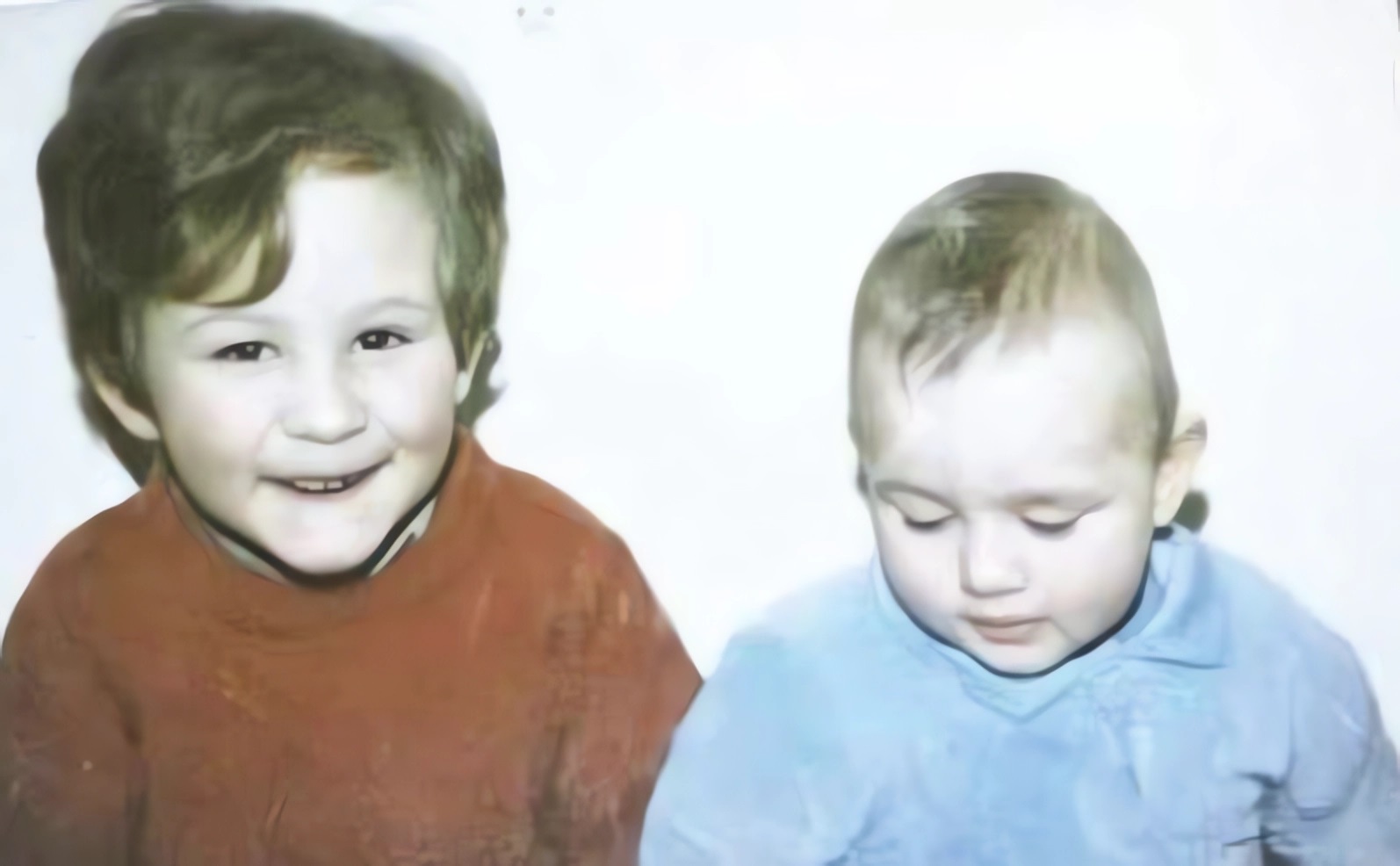
In the attack on the village of Blace, the minors Miroslav Kuljanin, Slobodan Kuljanin and Radoslav Kuljanin were killed.
In addition to these crimes, the suffering of the Serbian population of Konjic is also testified to by the fate of Žarko Kuljanin, who was born while his mother was in captivity together with other women and children from Bradina. His mother, traumatised by the consequences of captivity and the news of her husband’s murder, gave birth to him in the seventh month of pregnancy in a Muslim hospital. The child was not placed in an incubator, which led to numerous severe health complications, and he lived with major health impairments. Žarko passed away in 2020.
According to data from the book Children Victims of War from the Republic of Srpska, published by the Republic Center for Research of War, War Crimes and Search for Missing Persons (edited by Nikola Borković and Milan Jeremić), a total of 61 children — minors of Serbian nationality — were registered as war victims in Konjic municipality. Five of them were killed, three were wounded, while the others were victims of imprisonment, camp detention, mistreatment, sexual abuse and other forms of crimes.
Mass Graves
According to data from the Republic Center for War, War Crimes and Missing Persons Research, during the attack on the Serbian village of Bradina at the end of May 1992, 38 people were killed and 10 were wounded. In the following period, at least another 20 persons of Serbian nationality from Bradina were killed. After the war, in the territory of Konjic municipality, 79 bodies of killed Serbs were exhumed from individual graves, along with three mass graves containing 30 bodies.
The largest mass grave, containing 22 bodies, was located in the courtyard of the Church of the Ascension of the Lord in Bradina. After the attack on Bradina, the church was destroyed and murdered Serbs were buried in its courtyard. The exhumation of the mass grave in Bradina took place from April 25 to 27, 1998.
Serbian Municipality of Konjic
During the war, the Serbian Municipality of Konjic was established with its centre in the village of Borci. This was also the seat of the 2nd Light Infantry Brigade of the Herzegovina Corps of the VRS, composed mostly of residents from the Konjic area. Although it successfully defended itself against attacks throughout the war, the territory of this municipality was awarded to the Federation of BiH under the Dayton Peace Agreement.
Memorialization and Remembrance
Every year on May 25, a memorial service (parastos) is held next to the monument to Serbian victims in Bradina. The central monument to Serbian victims from the Konjic area is located in Gacko, and another monument has been erected in the village of Luka near Nevesinje. The monument in Gacko bears the names of 383 Serbian war victims. Among them are: 167 fallen fighters of the 2nd Light Infantry Brigade from Konjic, 9 volunteers, 35 killed in camps, 13 members of other military units killed in the territory of Konjic municipality, 24 residents of Konjic killed in the Defence-Patriotic War across the Republic of Srpska, and 135 civilian victims from the territory of that municipality. According to the 2013 census, only 355 Serbs, or 1.4%, remained living in Konjic municipality. These figures testify to the drastically changed ethnic structure and to what happened to the Serbs in this area.
The Serbian Orthodox Church nurtures the memory of the victims and their suffering in the Konjic area as well. During the consecration of the restored Church of the Holy Apostles Peter and Paul in Borci — the seat of the former Serbian municipality of Konjic — on St. Peter’s Day in 2019, an icon dedicated to the new child martyrs Peter and Paul Golubović was unveiled.
Anis Kosovac, a resident of Konjic, at his own expense and according to his own conscience, in 2018 — 26 years after the crime — erected a memorial plaque to Peter and Paul Golubović on the gate at the entrance to the Orthodox cemetery in Musala, Konjic.
Although several court proceedings were conducted for some of the crimes in the Konjic area, it can be said that these crimes — like many others committed against Serbs — remain sidelined and largely invisible to the international public.
Sources and Literature:
- Предраг Лозо, К’о ружан сан, задњи пут погледајте град, Злочини над Србима у Мостару и околини 1992-1995, РЦИРЗ, Бања Лука 2024, 127-132.
- Атлас злочина над Србима током Одбрамбено-отаџбинског рата, I, 1992,283-284
- www.nestalirs.com